Wednesday, November 3, 2010

German Empire & Austrian Empire - 1871

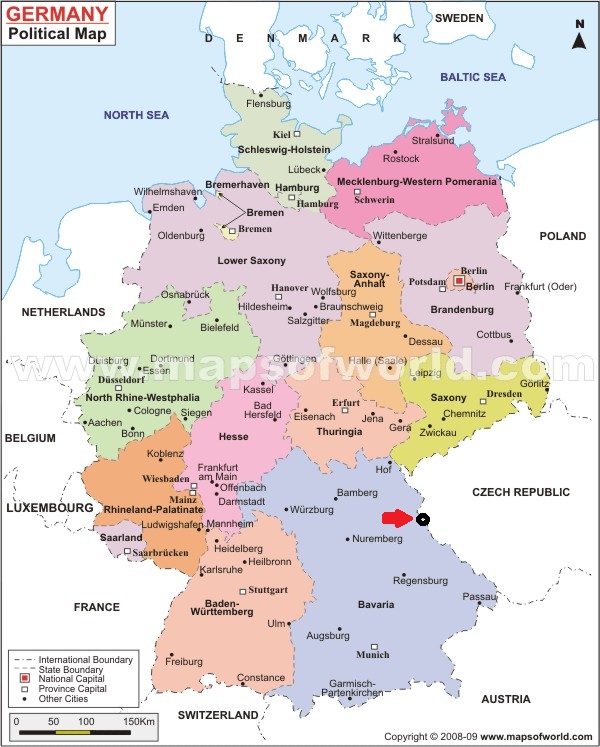
Current Political Map of Germany

1871 - German Empire vs. Austrian Empire

George Prokosch WWI Draft Registration Card

WWI Draft Registration Card
There are only a few issues with this document... 

  • Middle name: Charles vs. Carl ?
  • Birthday:    13 Nov 1895 vs. 13 Nov 1894 ?
  • Birth in New Ulm vs Sleepy Eye ?
  • Living in Bird Island, MN, Farming, short, slender - These items seem correct... Also it was not clear what year he was really born.  Even his drivers license said 1895.

1880 Census - Franz & Barbara Prokosch Family

1880 Census
Once again Prokosch is misspelled!!!

John & Peter show up as living with the family, but do not show up on the manifest of the OHIO.  They must have traveled to the US prior to the rest of the family.

Sunday, October 24, 2010

History: Renville County, Bird Island, Kingman, Sigel Twp, Brown County

Renville County
This county, established February 20, 1855, and organized March 1 and November 8, 1866, was named for Joseph Renville, a "bois brule, " whose father was French and mother Indian, of whom Dr. E. D. Neill gave an appreciative sketch in the first volume of the MHS Collections. Renville was born at or near the Kaposia village of the Dakota, on the Mississippi a few miles below St. Paul, about the year 1779. After a few years at school in Canada, he became a voyageur for an English company in the fur trade of the Northwest. In the War of 1812 he received the appointment and rank of a captain in the British army and led a company of Dakota warriors against the U.S. frontier. He was employed by Maj. Stephen H. Long as the interpreter of his expedition to the Red River and Lake Winnipeg in 1823; and William H. Keating, the historian of the expedition, derived from him a large amount of information relating to the Dakota people. Afterward, having become an agent of the American Fur Company, Renville erected a trading house at Lac qui Parle and resided there until his death, which was in March 1846.  He was a friend of Rev. Thomas S. Williamson, who came as a missionary to the Dakota of the Minnesota valley in 1835. "Renville warmly welcomed him," wrote Dr. Neill, "and rendered invaluable assistance in the establishment of the missions. Upon the arrival of the missionaries at Lac qui Parle, he provided them with a temporary home. He acted as interpreter; he assisted in translating the Scriptures, and removed many of the prejudices of the Indians against the white man's religion."

BIRD ISLAND Township, Renville County
Settled in the spring of 1872, was organized October 21, 1876, and its city in sections 13, 14, 23, and 24 of the same name, platted in July 1878, was incorporated March 4, 1881, and was reincorporated on June 1, 1908, and separated from the township. The name was derived from a grove of large trees, including many of the hackberry, in section 15, about a mile west of the village and on the south side of the railway, surrounded by sloughs, like an island, whereby it was protected from prairie fires. This grove, named Bird Island for its plentiful wild birds, was a favorite camping place of Indians and trappers, and it supplied timber for the early settlers. The village developed when the Hastings and Dakota Railway came in 1878; the post office began in 1878.


Main Street Bird Island
KINGMAN Township, Renville County
Settled in May 1877, organized September 3, 1878, was named by S. T. Salter, the first township clerk, in honor of W. H. Kingman, his former fellow townsman in Winn, Maine, who removed to Wisconsin and purchased much land in this township but did not settle here.

SIGEL Township, Brown County
 Settled in 1856, organized April 28, 1862, was named in honor of Franz Sigel, a general in the Civil War. He was born at Sinsheim, Baden, Germany, November 18, 1824; died in New York City, August 21, 1902. He came to the United States in 1852; settled in St. Louis, 1858, as a teacher in a German institute; organized a regiment of U.S. volunteers, 1861, of which he became colonel; won the battle of Carthage, Mo., July 5, 1861; was promoted to the rank of major general, March 1862, and took command of a wing of the Army of Virginia; was appointed to the command of the Department of West Virginia in February 1864; was U.S. pension agent in New York City, 1885-89. About the year 1873 Gen. Sigel visited New Ulm and this township.

My Wife is a Mayflower Descendant

My wife and daughter are 13th and 14th generation Mayflower Descendants....  
The Smith-Edgerton-Bradford line leads back to Governor William Bradford...
There is already a wealth of information readily available out there...
So I have only included a quick snapshot and the attached report...

Governor William Bradford
Mayflower
The Pilgrims were a group of English people who came to America seeking religious freedom during the reign of King James I. After two attempts to leave England and move to Holland, a Separatist group was finally relocated to Amsterdam where they stayed for about one year. From there the group moved to the town of Leiden, Holland, where they remained for about ten years, able to worship as they wished under lenient Dutch law.

MITCHELL - Ancestry Reports


The first link will take you to the Mitchell Ahnentafel PDF Report. 

Mitchell Family - Simple Ahnentafel Report 


The second link will take you to the Pierre Mitchell Register:

Register Report of Pierre Michel


PROKOSCH - Ancestry Reports

Two Prokosch Ancestry Reports:


Church Register for Berg and Melmitz

Kirchenbuchverzeichnis des Pfarrbezirks / Church registers in the parish:

Berg (c. Hora Svatého Václava) mit Ortschaften: Berg, Hoslau, Natschetin, Schilligkau, Schiefernau, Trohatin

Band Film Matriken-Art  Pfarrorte      Jahrgänge von/bis
 
 1   SM    *  oo        Pfarrbezirk       1680-1718
3   SM    *i           Pfarrbezirk       1711-176l i/s
5   SM    *            Pfarrbezirk       1762-1784 i/s
33            ooi       Pfarrbezirk       1719-1770
6   SM       ooi       Pfarrbezirk       1771-1784
2   SM           +     Pfarrbezirk       1719-1750
 4   SM           +     Pfarrbezirk       1751-1784
 
 7         *i           Berg              1784-1806
22         *i           Berg              1806-1862
28         *i           Berg              1863-1885
3         *i           Hoslau            1784-1807
23         *i           Hoslau und Mühlen 1806-1862
 9         *i           Natschetin        1784-1805
24         *i           Natschetin        1805-1857
10         *i           Schilligkau       1784-1803
25         *i           Schilligkau       1803-1847
11         *i           Schiefernau       1784-1823
12         *i           Trohatin          1784-1804
26         *i           Trohatin          1804-1827
27         *i           Trohatin          1828-1859

Villages - German/Czech Location and Translation (10 mile radius from Trohatin)

Villages – German / Czech Names


Searching for towns within 10 miles of 49°32’N 12°46’E
Trohatin.  Village Coordinates Maps Country Distance/Direction from 49°32’N 12°46’E 10 mile radius
Alt Gramatin 49°33’N 12°45’ Czech Republic  1.4 miles NNW 
Alt Parisau 49°28’N 12°50’ Czech Republic  5.5 miles SSE 
Alt Possigkau 49°27’N 12°49’ Czech Republic  6.2 miles SSE 
Altenried 49°26’N 12°38’ Germany  9.1 miles SW 
Arnstein 49°24’N 12°44’ Germany  9.3 miles S 
Bebenburg 49°31’N 12°33’ Germany  9.8 miles W 
Bernartice 49°38’N 12°48’ Czech Republic  7.1 miles NNE 
Blížejov, Blisowa 49°30’N 12°59’ Czech Republic  10.0 miles ESE 
Breitenried 49°27’N 12°37’ Germany  8.9 miles SW 
Čečín 49°36’N 12°45’ Czech Republic  4.7 miles N 
Charlottenthal, Charlottental 49°29’N 12°38’ Germany  6.9 miles WSW 
Chrastavice 49°27’N 12°57’ Czech Republic  10.0 miles SE 
Darmyšl, Darmschlag 49°39’N 12°53’ Czech Republic  9.6 miles NNE 
Dehetné 49°38’N 12°46’ Czech Republic  6.9 miles N 
Dietersdorf 49°32’N 12°34’ Germany  9.0 miles W 
Doubrava, Dobrowa 49°34’N 12°59’ Czech Republic  10.0 miles ENE 
Doubravka, Dobraken 49°35’N 12°45’ Czech Republic  3.5 miles NNW 
Drahotín, Trohatin 49°32’N 12°46’ Czech Republic  0.0 miles N 
Draženov 49°27’N 12°52’ Czech Republic  7.3 miles SE 
Drissgloben 49°39’N 12°43’ Czech Republic  8.4 miles NNW 
Edlmühl 49°25’N 12°38’ Germany  10.0 miles SW 
Eglsee 49°25’N 12°39’ Germany  9.6 miles SSW 
Eisendorf 49°35’N 12°35’ Czech Republic  8.9 miles WNW 
Friedrichshäng 49°32’N 12°35’ Germany  8.2 miles W 
Friedrichshof, Bedřichov 49°31’N 12°41’ Czech Republic  3.9 miles WSW 
Gross Malowa 49°37’N 12°57’ Czech Republic  10.0 miles NE 
Gross Wonetitz, Bonětice 49°40’N 12°49’ Czech Republic  9.5 miles NNE 
Hammer 49°25’N 12°42’ Germany  8.6 miles SSW 
Hannesried 49°27’N 12°35’ Germany  10.0 miles SW 
Hašov, Haschowa 49°34’N 12°52’ Czech Republic  5.0 miles ENE 
Havlovice 49°26’N 12°54’ Czech Republic  9.1 miles SE 
Helligenkreuz, Heiligenkreuz 49°34’N 12°45’ Czech Republic  2.4 miles NNW 
Herštejnské Chalupy, Gibacht 49°29’N 12°43’ Czech Republic  4.1 miles SSW 
Höll 49°25’N 12°42’ Germany  8.6 miles SSW 
Holubeč 49°36’N 12°47’ Czech Republic  4.7 miles N 
Hora Svatého Václava, Deštná, Berg 49°31’N 12°45’ Czech Republic  1.4 miles SSW 
Horoušany, Horauschen 49°33’N 12°47’ Czech Republic  1.4 miles NNE 
Basic Genealogical Vocabulary

Reference Section

Basic Genealogical Vocabulary
English                                                    German                                 Czech

birth                                                   Geburt                                           narození
born                                                   geboren, geb.                                narozený(á), rozený(á)
(il)legitimate                                  (un)ehelich                                      (ne)manželský(á)
baptism                                            Taufe                                                 křest, křtiny
baptized                                           getauft, get.                                    pokřtěný(á)
marriage                                           Heirat, Hochzeit,                          svatba, oddavky
                                                             Trauung,Vermählung
marry                                                 heiraten, trauen,                           vdát se, oddávat,
                                                             verheiraten, verh.,                        byli oddáni
                                                             vermählen, verm.
death                                                 Tod                                                     umrti, smrt
died                                                    gestorben, gest.                            zemřel(a)
burial                                                 Beerdigung, Begräbnis               pohřeb
buried                                               beerdigt, begraben                       pohřbený(á)
cemetery                                          Friedhof                                            hřbitov
father, mother                                Vater, Mutter                                 otec, matka
parents                                             Eltern                                                rodiče
husband                                           Mann, Ehemann, Gatte               manžel, muž
wife                                                    Frau, Ehefrau, Gattin                  manželka, žena
married couple                              Ehepaar                                            manželé
son                                                      Sohn (Söhnlein)                             syn (synek, synáček)
daughter                                          Tochter (Töchterlein)                  dcera (dcerka)
child                                                   Kind                                                   dítě
male, female                                   männlich, weiblich                        mužský, ženský
sister, brother                                Schwester, Bruder                        sestra, bratr
siblings                                             Geschwister                                     sourozenci

Saturday, October 23, 2010

"American Notes" by Charles Dickens

In 1842, the year prior to the emigration of this family, Charles Dickens traveled to America. Some of his experiences and some of the places he visited were very similar to those described here. Dickens' account of his trip was published as "American Notes."

"Imagine the wind howling, the sea roaring, the rain beating: all in furious array against [the ship]. Picture the sky both dark and wild, and the clouds, in fearful sympathy with the waves, making another ocean in the air. Add to all this, the clattering on deck and down below; the tread of hurried feet; the loud, hoarse shouts of seamen; the gurgling in and out of water through the scuppers; with, every now and then, the striking of a heavy sea upon the planks above, with the deep, dead, heavy sound of thunder heard within a vault; -- and there is the head-wind of that January morning.

"I say nothing of what may be called the domestic noises of the ship: such as the breaking of glass and crockery, the tumbling down of stewards, the gambols, overhead, of loose casks and truant dozens of bottled porter, and the very remarkable and far from exhilarating sounds raised in their various state-rooms by the seventy passengers who were too ill to get up for breakfast. I say nothing of them: for although I lay listening to this concert for three or four days, I don't think I heard it for more than a quarter of a minute, at the expiration of which term, I lay down again, excessively sea-sick."

SS OHIO


OHIO (1868), AMAZZONE [1894/95], RIO SANTA CRUZ [1896] Photograph (detail) of the OHIO in the Neuer Hafen, Bremerhaven, about 1887. Source: Arnold Kludas, Die Geschichte der Deutschen Passagierschiffahrt, Bd. 1: Die Pionierjahre von 1850 bis 1890, Schriften des Deutschen Schiffahrtsmuseums, 22 (Hamburg: Kabel, c1986), p. 171. Photo used with permission from the Steamship Historical Society of America Collection, Langsdale Library, University of Baltimore.
OHIO / AMAZZONE / RIO SANTA CRUZ 1868

The steamship OHIO was built by Caird & Co, (yard #148) Greenock in 1868 for (Norddeutscher Lloyd) North German Lloyd of Bremen, Baltimore service. This was a 2,394 gross ton ship, (92,05 x 12,02 meters) length 290ft x beam 39ft, clipper stem, one funnel, two masts (rigged for sails), iron construction, single screw, single-expansion engine, and a service speed of 10 knots. There was accommodation for 84-1st class and 717 in steerage (“Zwischendeck”); crew of 79, (Conflicting sources state only 600-3rd class passengers). Launched December 18, 1868, she sailed her maiden voyage from Bremen in March 8, 1869 on her maiden voyage to Southampton and Baltimore.

Passage to a New World (1879)

The massive steamship OHIO of the North German Lloyd line pulled away from the dock in the northern German harbor town of Bremerhaven, port terminus of the city of Bremen, to venture beyond the mouth of the Weser River and into the cold green waves of the North Sea. Picking up speed, the ship steamed its way past the Netherlands, through the narrow Strait of Dover, and entered the English Channel, making a brief stop at the port town of Southampton in the center of the southern coast of England. Then the sleek, two-masted vessel put out to sea once more, this time heading west across the wide Atlantic. Its final destination: The Port of Baltimore.

In this time period, unprecedented masses of people were leaving their native homes in the German & Austrian Empires to come to America. But this tidal wave of emigration had been building for over 40 years. One by one, encouraged by letters from friends, relatives, and neighbors who had emigrated before them, and spurred on by the promise of a better life and future for themselves and their children, they would each, individually and for their own reasons, come to make the momentous decision to leave their familiar world and loved ones behind and migrate toward the unknown.

During the three large waves of emigration from the area today known as Germany & Austria in the period 1845 to 1893, an estimated 4.5 million people left. Most of the emigrants at that time came from the areas then known as Prussia, Bohemia, Bavaria, Württemberg, Hessen, and Baden (map). They made their way across their own country, often leaving their own villages or valleys for the first time in their lives, to travel by river, train, horse, wagon, or by foot to one of the great German emigration ports such as Hamburg or Bremen/Bremerhaven (nicknamed “Der Vorort New-Yorks”—“the suburb of New York”). Most of those bound for America aimed for the ports of New York and Baltimore.


In the 1870’s steamships replaced sailing ships on the trans-Atlantic migration routes. What had in earlier decades been a terrible passage of many months entailing risk of disease, starvation, and death, now became a voyage of two weeks. By the 1880’s there were regularly scheduled steamship departures from Bremen to New York, Baltimore, New Orleans, Galveston, and other ports in the United States. Seasickness, poor food, crowded conditions, illness, and mishaps at sea during the voyage still threatened, but by 1883 the trip from the Old Country to the New World clearly held more advantages than risks.


A Short Immigration Story

The Trip to the New World
While we do not have any diaries, journals or first hand information documenting the Franz & Barbara Prokosch trip, I have included an interesting story of another family that made the trip, likely under similar conditions just a few months prior to the Prokosch trip....

Preparing to Leave
At last, we kids shouted, "Hooray, we are going to America!" We had no idea what lay ahead of us on the long journey. In the spring of 1878, we found a buyer who paid us 1600 Thaller for our house and land in Barkhausen, but left us the crop. We began our trip to America in August 1878. The last things we sold were the family dog and cat. The kitty brought 24 Groschen, or 48 cents.

At that point we said, "I sadly cry, 'Old house, good-bye!' In fact, tears flowed freely. The farewell from the church made the family especially heavy-hearted. By the way, we didn't go alone. Two other families from Barkhausen left with us, do we were together with good friends. Our [1878 traveling] family consisted of ten people.

Starting off to Bremerhaven
We began the trip to Bremerhaven with our chests and boxes in a big hay wagon. We were joined by other farm families, including some young guys who were a lot of fun. However, the children had to spend some very uncomfortable days sitting on the chests and in among the baggage, and we wished we were in Bremen where the beautiful ship waited for us. At least that is what they told us kids.

Arrival in Baltimore

After a voyage where you were seasick much of the time due to rough weather, you finally arrive in the Chesapeake Bay. Public health inspectors board the ship as it enters the bay and begin physically inspecting the passengers (Esslinger 1988). They are looking for illnesses like typhus, cholera, smallpox, tuberculosis, and trachoma. 

Luckily, you were warned before the voyage by a knowledgeable fellow traveler not to bathe in seawater which causes red eyes which many inspectors mistake to indicate trachoma (Brugger 1988). The ship berths at the B&O immigrant pier at Locust Point, and you are allowed to enter the terminal. Over the next several hours you are interviewed and issued papers by immigration inspectors, your baggage is poked and prodded, and you are finally able to leave. 

Baltimore Immigration-Private Screenings
Unlike at Ellis Island, immigrant processing at Baltimore was conducted by private companies. Immigrants with steerage tickets were inspected at Locust Point, but their examinations were considered much more cursory than those conducted at Ellis Island. To make transition between sail and rail easier, B&O Railroad constructed buildings that served as the end of both steamship and rail lines - so passengers could get off the boat, pass through the inspections and then board their train west.

Baltimore's heyday as a port of immigration was roughly 1870 to 1914, when WWI stemmed the flow. By 1913, an average of 40,000 immigrants came through Baltimore each year.
Sources: Forgotten Doors: The Other Ports of Entry to the United States, ed. M. Mark Stolarik (Philadelphia: Balch Institute Press, 1988); Immigrating to the Port of Baltimore, 

http://www.clis2.umd.edu/~mddlmddl/791/communities/html/pob.html; "Immigration Era, Part I: Port of Pleasant Landings," Baltimore historical Society, 

http://www.historicbaltimore.org/program/immigration.htm; William Connery, Point of Entry: Baltimore, the Other Ellis Island, 

http://www.baltimoremd.com/charm/pointofentry.html.

The Trip

Imagine yourself in this situation. Times in the old country are hard, food is scarce and expensive. Your family has scraped up enough money to buy you a ticket to Baltimore. There will be one less mouth to feed, and, once in Baltimore, you must get a job and send money home. You will come alone because there is so little money. After a tearful goodbye, you make a long, hazardous, overland journey to a European port such as Bremen, LeHavre, or Liverpool. 


Once there you are subjected to a rigorous physical examination by a steamship company physician before you are allowed to buy a ticket. After 1891, according to U.S. immigration law, steamship companies were financially responsible for bearing all costs pertaining to returning rejected immigrants to their homelands (Kraut 1982). Immigration officials could exclude from entry those who were sick or those who, after 1882, it was felt could become a public burden (Brugger 1988). Like most passengers, you can only afford a steerage fare. The steerage hold of a ship is nothing more than a large open space originally designed to transport animals and cargo. You are crammed into this space with 2,000 other human beings. There is little ventilation; the water is bad. Epidemics aboard ships are not uncommon. Cooking is done in the open, and fire aboard the ship is a real possibility as are collisions with other ships or icebergs.

Goodbye Bremen… Hello Baltimore!

Background information:

The influx of immigrants to American shores between 1831-1930 can be arranged into 3 great waves with peaks occurring in the 1850's, the 1880's, and the decade before World War I. (Jones 1976) High school students at the Academy for the Advancement of Science and Technology in New Jersey have posted a chart illustrating these peaks and waves of immigration. Nearly 5 million persons emigrated to the U.S. during the first wave, while more than 32 ½ million came in the waves that followed.

The port of Baltimore figured prominently in the latter 2 waves, 1861 to 1930. Most of the 2 million immigrants who came to Baltimore between 1820-1989 came during this 70 year period.(McWilliams 1989) Why Baltimore?


One might reasonably expect to find that, as in the first wave, natural disaster and hardship, akin to that evidenced in the Irish potato famine, played a major role. While this is certainly true--Jews fled Poland and Russia between 1880-1921 due to 3 series of pogroms, each worse than the last (Kraut 1982)--economic factors are also said to have played a large role. (Esslinger 1988) For example, strong economic ties existed between Baltimore and the German port of Bremen due to Baltimore's exports of tobacco, cotton, and grain. In 1868, John W. Garrett, president of the Baltimore and Ohio Railroad (B&O), executed an agreement with the North German Lloyd steamship line to provide regular service to Baltimore


Exports from Baltimore would go to Bremen, and immigrants would come to Baltimore on the return voyage disembarking at the B&O's newly built immigrant pier. Two-thirds of the immigrants arriving in this fashion purchased a single ticket which saw them across the ocean and to cities of the western U.S. (Olson 1980) The pier was constructed so that, in many cases, immigrants proceeded directly from the pier to waiting trains. Baltimore became second only to New York in the number of immigrants received, and this service lasted until World War I. (Owens 1941, 295)

Arranging immigration figures neatly into waves tells us little of the immigrant experience. The human masses so blithely considered as waves were, after all, composed of individuals. It has been said that so many emigrated from their homelands during the period 1861-1930 because it was easy. After the 1920's, U.S. immigration law became increasingly restrictive, effectively reducing the flow of immigrants to a trickle (Jones 1976). The U.S. Immigration & Naturalization Service has a site which lists major immigration legislation. Historians cite advances such as the telegraph, the railroad, and the steamship in accounting for the new ease of travel. The steamship was instrumental in shortening the length of the average voyage from a total of six weeks to a total of 14 days, (Jones 1976) but the reader will have to decide if the scenario that follows sounds easy. 

Immigration, The Trip to Port of Bremen

Many emigrants from Germany, Austria and Central Europe headed for the German port of Hamburg. Hamburg became a port of emigration because of its competition with Bremen as a seaport for trade. In the early 1830s, Bremen was doing well in its trade with America, while Hamburg trade was mostly with the West Indies and Latin America. When a ship arriving from America was ready for the return trip, Bremen often did not have enough export goods and the ship had to return to America empty. This made the shipping process very expensive. To combat this problem, Bremen began to lure part of the emigration traffic away from other European ports such as Le Havre, Antwerp, and Rotterdam. Its efforts were successful. Hamburg had a decree which forbid group emigration. Only single families or travelers could emigrate from Hamburg.


The collection of emigrants in Bremen caused some problems for the city. Often emigrants were stranded there without food and had to go through the city begging because they did not have enough money for lodging or passage. Unscrupulous ship's agents enticed them to Bremen with a promise to ship them to America and get them a plot of land. Then they took what money the emigrants had. There were many other underhanded deals as well. This left the city of Bremen responsible for providing financial assistance.


In order to safeguard its emigration business, Bremen passed a decree in 1832 which freed the city from giving financial assistance to emigrants, while making it obligatory for ship owners to certify the seaworthiness of their vessels, to keep passenger lists, and to keep provisions for 90 days on board. This meant that ship's agents had to deliver what they promised.